Comparing 2026 Workplace Benefits: Why 60% of Employees Overlook These 3 High-Value Offerings

Navigating your full compensation package often means leaving significant money on the table. While traditional health plans get all the attention, 2026 Workplace Benefits feature high-value perks that roughly six out of ten employees routinely ignore.
Modern total rewards strategies have expanded far beyond basic medical insurance to include specialized care accounts, student loan repayment matching, and targeted mental wellness stipends.
Unfortunately, complex enrollment portals and poor internal communication cause workers to pass up thousands in annual value.
Whether you are preparing for open enrollment or reviewing your current job offer, knowing where to look can radically boost your financial well-being. Here are the three most overlooked corporate perks this year—and how to claim them.
The Evolving Landscape of 2026 Workplace Benefits
The year 2026 is poised to bring significant shifts in employee benefits, with companies increasingly tailoring offerings to meet diverse workforce needs.
However, a recent study indicates a critical disconnect: approximately 60% of employees are consistently overlooking or underutilizing at least three high-value benefits available to them.
This oversight represents a substantial loss for employees, who miss out on valuable resources designed to enhance their financial, physical, and professional well-being.
For employers, it signifies a return on investment that falls short of expectations, despite considerable efforts in benefit design and communication.
Understanding the root causes of this widespread unawareness is crucial for both parties. It involves examining the complexity of benefit packages, the effectiveness of communication strategies, and the evolving priorities of the modern workforce as we approach 2026 workplace benefits.
Unpacking the Disconnect: Why Employees Miss Out
The primary reason for employees overlooking high-value benefits often stems from a lack of clear, consistent, and personalized communication.
Many benefit programs are presented in generic, one-size-fits-all formats that fail to resonate with individual employee needs or highlight the specific advantages of each offering.
Furthermore, the sheer volume and complexity of modern benefit packages can be overwhelming.
Employees, already inundated with daily tasks, may not dedicate sufficient time to thoroughly review and understand all available options, especially when presented with dense documentation or infrequent informational sessions.
Another contributing factor is the perception of immediate versus long-term value.
Employees often prioritize benefits with instant gratification, such as health insurance or paid time off, while overlooking offerings that provide significant long-term advantages but require more proactive engagement or planning, especially when considering 2026 workplace benefits.
Communication Breakdown and Information Overload
Many organizations struggle with effectively communicating the intricacies of their benefit programs. This often leads to employees feeling uninformed or confused about what is truly available to them.
- Generic presentations fail to highlight personalized advantages.
- Infrequent communication cycles leave employees out of the loop.
- Complex jargon within benefit descriptions creates barriers to understanding.
The sheer volume of information presented can also be a deterrent. Employees may glance over comprehensive benefit guides, missing crucial details about high-value offerings that could significantly impact their lives.
Perceived Value vs. Actual Value
Employees often prioritize immediate benefits like health insurance or vacation days, overlooking less obvious but equally impactful long-term offerings. This short-sighted view can prevent them from leveraging their full compensation package.
The perceived effort required to engage with certain benefits also plays a role. If a benefit seems complicated to enroll in or utilize, employees may defer exploring it, even if its potential value is substantial. This is a common pitfall when navigating the array of 2026 workplace benefits.
Overlooked Offering 1: Comprehensive Financial Wellness Programs
One of the most consistently overlooked yet high-value benefits for 2026 workplace benefits is comprehensive financial wellness programs.
These are designed to equip employees with the tools and knowledge to manage their finances effectively, plan for retirement, and navigate unexpected economic challenges.
Despite rising concerns about financial stability among the workforce, many employees either do not know these programs exist or underestimate their impact.
These offerings often include personalized financial counseling, debt management workshops, investment education, and even access to discounted financial services.
The long-term benefits of engaging with financial wellness programs are immense, potentially leading to increased savings, reduced financial stress, and greater overall economic security.
Yet, a large segment of the workforce remains disengaged from these critical resources, missing out on crucial support for their 2026 workplace benefits.
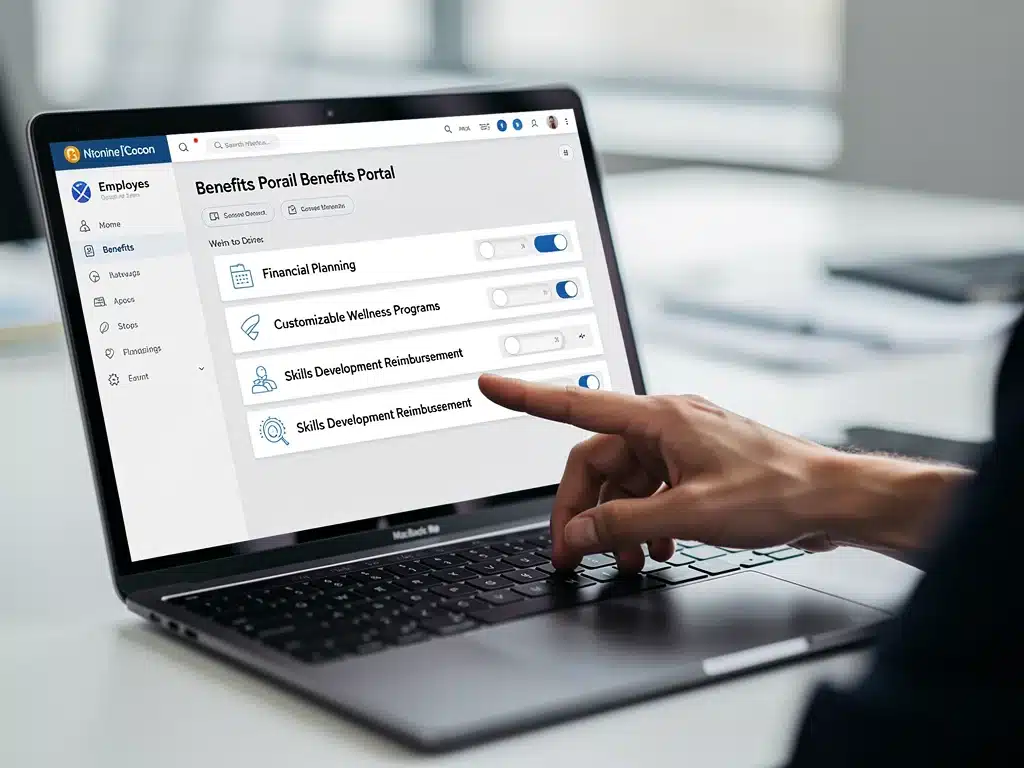
The Hidden Gem of Financial Planning
Many employees view financial planning as a private matter or something only for high-income earners. This misconception prevents them from utilizing employer-sponsored programs that offer expert guidance accessible to all.
These programs often provide resources for budgeting, saving for major life events, and understanding complex investment strategies, directly impacting an employee’s ability to achieve long-term financial goals. Such offerings are key components of progressive 2026 workplace benefits.
- Personalized financial counseling sessions.
- Workshops on debt management and credit improvement.
- Retirement planning and investment education.
The availability of these resources can significantly alleviate financial stress, a major contributor to reduced productivity and employee turnover. Companies that effectively promote these programs see a more engaged and stable workforce.
Overlooked Offering 2: Advanced Professional Development and Upskilling
Another high-value benefit frequently ignored in Comparing 2026 Workplace Benefits is access to advanced professional development and upskilling opportunities.
In an increasingly competitive job market, continuous learning is not just an advantage but a necessity, and employers are investing heavily in it.
These benefits can range from tuition reimbursement for higher education to certifications in emerging technologies, leadership training, and specialized workshops. The aim is to enhance employees’ current skill sets and prepare them for future roles within the organization or industry.
Despite the clear career advancement potential, many employees do not engage with these programs, often citing lack of time or perceived irrelevance to their immediate job duties.
This oversight means they miss opportunities to boost their earning potential and career trajectory, a critical aspect of 2026 workplace benefits.
Investing in Your Future: Beyond the Day-to-Day
Employees often focus on immediate job requirements, overlooking opportunities that can significantly enhance their long-term career prospects. Professional development is not just about current tasks but about future growth and adaptability.
The perceived time commitment for these programs can be a barrier, leading employees to defer or ignore valuable training. However, the return on investment in terms of career longevity and salary growth far outweighs the initial effort.
- Tuition assistance for degrees and certifications.
- Access to online learning platforms and specialized courses.
- Mentorship programs and leadership development workshops.
Companies that strategically integrate and promote these upskilling benefits foster a culture of continuous learning, which is vital for remaining competitive in the rapidly evolving business landscape of 2026 workplace benefits.
Overlooked Offering 3: Customizable Wellness and Mental Health Support
The third crucial, yet often neglected, benefit in Comparing 2026 Workplace Benefits involves customizable wellness and robust mental health support programs.
With increasing awareness of mental health’s impact on overall well-being and productivity, many companies are expanding these offerings significantly.
These benefits extend beyond basic health insurance to include access to therapy, counseling services, stress management resources, mindfulness programs, and even physical wellness initiatives like subsidized gym memberships or health coaching.
The customizable aspect allows employees to select programs that best fit their individual needs.
Despite the clear link between mental and physical health and job performance, many employees hesitate to utilize these resources due to stigma, lack of awareness, or simply not knowing how to access them.
This reluctance prevents them from receiving crucial support that could improve their quality of life both inside and outside of work, impacting their overall experience with 2026 workplace benefits.

Breaking the Stigma: Mental Health as a Core Benefit
The stigma associated with mental health challenges continues to deter many employees from seeking help, even when robust support systems are available through their employers. This cultural barrier prevents individuals from accessing vital care.
Companies are actively working to normalize mental health discussions and promote these benefits as essential components of overall well-being, not just reactive care. Effective communication is key to overcoming this barrier and encouraging utilization of 2026 workplace benefits.
- Confidential counseling and therapy sessions.
- Stress management tools and mindfulness resources.
- Employee Assistance Programs (EAPs) for various life challenges.
When employees feel supported in their mental and physical health, they are more engaged, resilient, and productive. Investing in and promoting these benefits is a direct investment in the human capital of an organization, especially concerning the comprehensive nature of 2026 workplace benefits.
Strategies for Employers: Enhancing Benefit Utilization
To combat the widespread underutilization of high-value benefits, employers must adopt more proactive and personalized communication strategies.
This involves moving beyond annual enrollment presentations to continuous, multi-channel engagement that highlights the relevance of benefits to individual employees’ life stages and needs.
Leveraging technology, such as AI-driven benefit recommendation platforms, can help employees navigate complex options and identify the most suitable offerings.
Personalized communications, perhaps through email campaigns or intranet portals, can spotlight specific benefits tailored to different employee demographics.
Furthermore, fostering a culture where benefit utilization is encouraged and celebrated can significantly increase engagement.
This includes testimonials from employees who have benefited from certain programs and clear, accessible guides on how to enroll and use each offering, impacting the effectiveness of 2026 workplace benefits.
Personalized Communication and Technology Integration
Generic benefit overviews often fail to capture employee attention or illustrate the direct relevance of offerings. Tailored messages that connect benefits to individual situations can significantly boost engagement and understanding.
Implementing user-friendly digital platforms that simplify benefit selection and management can empower employees to take a more active role in their well-being. These platforms should offer clear explanations and easy access to resources for 2026 workplace benefits.
- AI-powered benefit recommendation engines.
- Interactive online portals with personalized dashboards.
- Ongoing educational webinars and workshops on benefit usage.
By making information more accessible and relevant, employers can overcome the communication gap that leads to underutilization. This proactive approach ensures employees fully appreciate and leverage their 2026 workplace benefits.
Employee Empowerment: Taking Charge of Your 2026 Workplace Benefits
Employees also bear a responsibility in maximizing their 2026 workplace benefits. This begins with dedicating time to thoroughly understand the complete range of offerings provided by their employer, rather than passively accepting the default or most obvious options.
Proactive engagement involves asking questions, seeking clarification from HR or benefit providers, and utilizing available resources like online portals or employee assistance programs. Understanding how each benefit aligns with personal goals and needs is paramount.
Ultimately, taking ownership of one’s benefits package can lead to significant improvements in financial security, career growth, and overall well-being.
Employees should view their benefits as an integral part of their total compensation and leverage them strategically to achieve their personal and professional objectives, especially when considering the full scope of 2026 workplace benefits.
Proactive Engagement and Self-Advocacy
Waiting for information to be delivered passively often results in missed opportunities. Employees must actively seek out details about their benefits package and understand how each offering can serve their specific needs.
This proactive approach includes attending informational sessions, reviewing benefit summaries, and reaching out to HR with specific questions. Self-advocacy ensures that employees don’t leave valuable resources on the table when it comes to 2026 workplace benefits.
- Regularly review benefit statements and updates.
- Participate in employer-sponsored benefit webinars.
- Consult with HR or benefit specialists for personalized advice.
By becoming informed and engaged consumers of their benefits, employees can unlock the full potential of their compensation package, leading to greater satisfaction and security, which is a key aim for 2026 workplace benefits.
| Key Overlooked Benefit | Brief Description |
|---|---|
| Financial Wellness Programs | Personalized counseling, debt management, investment education. |
| Professional Development | Tuition reimbursement, certifications, leadership training for career growth. |
| Customizable Wellness & Mental Health | Therapy access, stress management, physical wellness initiatives. |
| Impact of Oversight | Employees miss out on financial security, career advancement, and well-being. |
Frequently Asked Questions About 2026 Workplace Benefits
Employees often overlook these benefits due to poor communication, information overload, and a focus on immediate gratification over long-term gains. The complexity of modern benefit packages also contributes to a lack of understanding and engagement with their 2026 workplace benefits.
The three most commonly overlooked high-value benefits are comprehensive financial wellness programs, advanced professional development and upskilling opportunities, and customizable wellness and mental health support. These offerings provide significant long-term advantages for those leveraging their 2026 workplace benefits.
Employers can encourage better utilization through personalized communication strategies, leveraging technology for benefit recommendations, and fostering a culture that openly discusses and promotes benefit usage. Clear, accessible guides and testimonials also prove effective for 2026 workplace benefits.
Neglecting these benefits can lead to missed opportunities for financial stability, slower career growth, and unaddressed mental and physical health issues. This can result in increased stress, reduced job satisfaction, and a lower overall quality of life, impacting the full potential of 2026 workplace benefits.
Employees should proactively review their benefit packages, attend informational sessions, and ask questions to HR or benefit providers. Utilizing online portals and seeking personalized advice ensures they make informed decisions and fully benefit from their 2026 workplace benefits.
What this means
The trend of employees overlooking high-value 2026 workplace benefits signals a critical area for improvement in corporate communication and employee engagement. Both employers and employees must recognize the substantial, often untapped, potential within these offerings.
Moving forward, a concerted effort to demystify benefits and highlight their direct impact on individual well-being and career trajectories will be essential for maximizing the value of 2026 workplace benefits.