Eliminating $15,000 in High-Interest Credit Card Balances: The 0% APR Balance Transfer Arbitrage
Anúncios
Watching hundreds of dollars vanish into monthly finance charges can make getting out of debt feel like an uphill battle. If heavy revolving debt is holding back your financial goals, switching up your repayment strategy can save you thousands.
Conquering High-Interest Credit Card Balances demands more than just making basic minimum payments each month. By leveraging a zero-percent interest promotion, savvy borrowers can freeze escalating finance fees and redirect every dollar toward slashing their actual principal.
Executing balance transfer arbitrage allows you to systematically pay off a $15,000 burden within a promotional window without giving extra cash to bank lenders. Here is how to structure the strategy, avoid transfer fees, and eliminate toxic debt safely.
Understanding the 0% APR Balance Transfer Arbitrage
The concept of 0% APR balance transfer arbitrage revolves around exploiting the temporary interest-free period offered by credit card companies. This allows cardholders to transfer balances from high-interest accounts to a new card, effectively pausing the accrual of interest on the transferred amount for a set duration, typically 12 to 21 months.
During this introductory period, every dollar paid goes directly towards reducing the principal debt, accelerating the path to becoming debt-free. This strategy is particularly powerful for those with a specific debt amount, like $15,000, as it provides a clear target and a defined timeline for repayment without the drag of compounding interest.
Anúncios
However, it is crucial to recognize that this is not a magic bullet but a strategic tool requiring discipline and careful planning. The success of High-Interest Credit Card Balances hinges on making consistent payments and avoiding new debt during the promotional period.
The Mechanics of a Balance Transfer
Initiating a balance transfer typically involves applying for a new credit card that offers a 0% APR promotional period on balance transfers. Once approved, you request to transfer your existing high-interest debt from one or more cards to the new account.
Most issuers charge a balance transfer fee, usually 3-5% of the transferred amount, which must be factored into the overall cost.
This fee is a one-time cost, generally much lower than the interest that would accrue on a $15,000 balance over several months or years. For example, a 3% fee on $15,000 would be $450, a small price to pay compared to potentially thousands in interest on a high-APR card.
The goal is to pay off the entire transferred balance before the 0% APR period expires and the standard, often higher, APR kicks in.
Identify high-interest credit card balances.
Research and apply for a 0% APR balance transfer card.
Understand and account for the balance transfer fee.
Careful consideration of the balance transfer fee is vital for calculating the true cost and potential savings. Many consumers overlook this upfront charge, which can impact the overall effectiveness of the strategy if not properly budgeted. Always compare offers and calculate the total cost before committing.
Identifying Suitable 0% APR Balance Transfer Offers
Not all 0% APR balance transfer offers are created equal, and selecting the right one is paramount for success in High-Interest Credit Card Balances. Key factors to consider include the length of the introductory 0% APR period, the balance transfer fee, and the credit limit offered.
Anúncios
A longer 0% APR period, ideally 18-21 months, provides more time to pay down the $15,000 balance without interest. While a 3% fee is common, some cards may offer lower or even no fees, which can significantly reduce the overall cost of the transfer. It is also important to ensure the new card's credit limit is sufficient to accommodate the $15,000 balance you intend to transfer.
It is advisable to check your credit score before applying, as the most attractive 0% APR offers are typically reserved for individuals with good to excellent credit. A strong credit profile increases your chances of approval and securing a high enough credit limit to cover your debt.
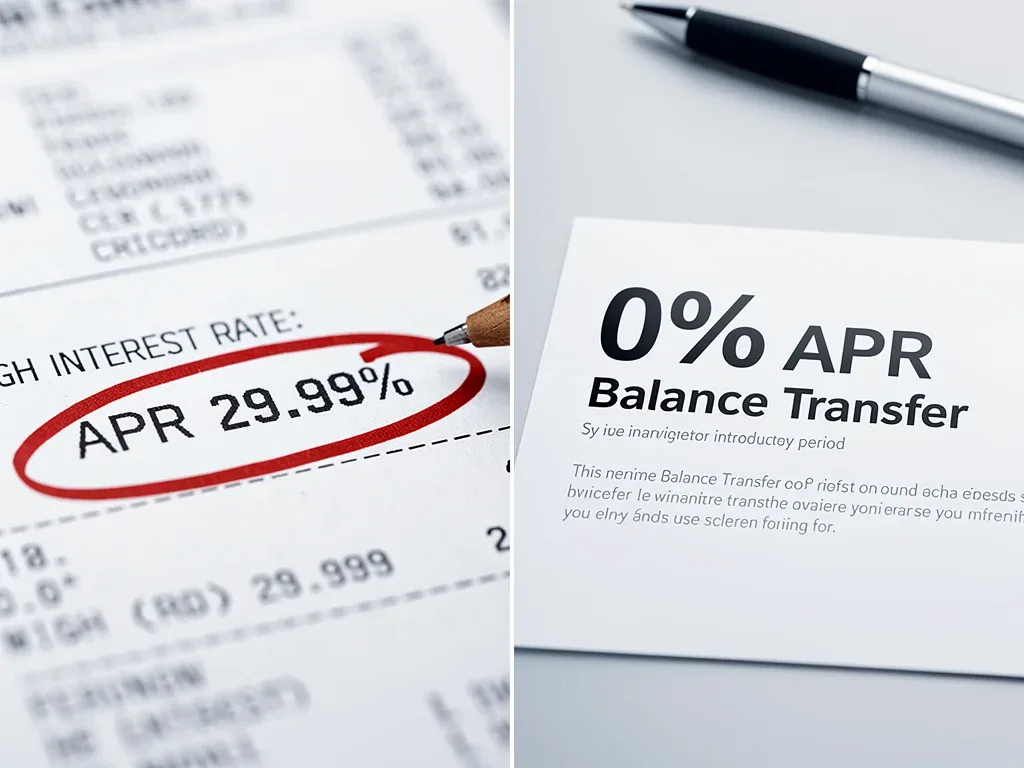
Key Factors in Card Selection
When evaluating potential cards, focus on the total cost and the repayment timeline. A card with a slightly higher balance transfer fee but a much longer 0% APR period might be more beneficial if it allows you to comfortably pay off the $15,000.
Conversely, a card with no fee but a short promotional window might be less effective if you cannot pay off the debt quickly.
Always read the fine print to understand the terms and conditions of the balance transfer. Pay close attention to what happens after the introductory period ends, as the standard APR can be quite high. This knowledge is crucial for planning your repayment strategy and avoiding unexpected interest charges.
Length of the 0% APR introductory period.
Balance transfer fee percentage.
Credit limit offered versus the $15,000 debt.
Some cards also offer rewards programs, but for the purpose of High-Interest Credit Card Balances, the primary focus should remain on the balance transfer terms. Distractions from rewards can lead to new spending, undermining the debt reduction goal.
Strategic Planning for $15,000 Debt Elimination
Once a suitable 0% APR balance transfer card is secured, meticulous planning becomes the cornerstone of success. The $15,000 debt needs to be systematically attacked during the interest-free window. This involves creating a detailed budget and a rigorous repayment schedule.
Divide the $15,000 by the number of months in your 0% APR period to determine the minimum monthly payment required to clear the debt.
For instance, if you have an 18-month promotional period, you would need to pay approximately $833.33 per month. Aim to pay more than this minimum if possible, as it provides a buffer against unexpected expenses and ensures you are well ahead of schedule.
It is imperative to cease using the original high-interest credit cards, and ideally, the new balance transfer card, for any new purchases. Accumulating new debt on any card will derail your efforts and can quickly negate the benefits of the 0% APR balance transfer strategy. Discipline is key to achieving your goal of eliminating $15,000 in high-interest credit card balances.
Crafting Your Repayment Schedule
A well-defined repayment schedule should be established immediately after the balance transfer is complete. This schedule should outline not just the monthly payment amount, but also specific dates for making those payments. Automating payments can be an effective way to ensure consistency and avoid missed deadlines, which could trigger interest charges.
Consider setting up reminders for payment due dates, especially if you are managing multiple accounts. Regularly reviewing your progress against your repayment plan is also crucial. This allows you to make adjustments if necessary and stay motivated as you see your $15,000 debt diminish.
Calculate required monthly payments to clear $15,000 within the 0% APR period.
Set up automated payments to ensure consistency.
Avoid making new purchases on any credit cards.
Many financial experts recommend creating a small emergency fund before aggressively paying down debt. This fund can prevent you from relying on credit cards for unforeseen expenses, thus protecting your progress in High-Interest Credit Card Balances.
Potential Pitfalls and How to Avoid Them
While the 0% APR balance transfer strategy offers significant advantages, it is not without its risks. One of the most common pitfalls is failing to pay off the entire balance before the promotional period ends. When this happens, the remaining balance accrues interest at the standard, often much higher, APR, which can quickly erase any savings gained.
Another common mistake is using the new balance transfer card for new purchases. This behavior, often referred to as 'revolving debt,' can lead to an even larger debt burden. The primary purpose of the 0% APR card should be solely for paying down the transferred balance, not for increasing overall spending.
Missing a payment can also be detrimental. Many 0% APR offers include a clause that revokes the promotional rate if a payment is late.
This means you could suddenly be charged interest on your entire $15,000 balance, negating the core benefit of the balance transfer arbitrage. Diligence in making on-time payments is paramount for successfully High-Interest Credit Card Balances.
Avoiding Common Mistakes
To mitigate the risk of falling into these traps, strict adherence to your repayment plan and budget is essential. Consider setting up automatic payments for at least the minimum required amount, and ideally, for your target monthly payment. This minimizes the chance of missing a payment due date.
It is also wise to keep the credit cards you transferred from open but unused, or even freeze them physically to prevent impulse spending. Closing them might negatively impact your credit score by reducing your overall available credit and increasing your credit utilization ratio. The goal is to reduce debt, not damage your credit profile.
Pay off the entire balance before the 0% APR period expires.
Refrain from making new purchases on the balance transfer card.
Always make payments on time to maintain the promotional rate.
Regularly monitoring your credit card statements for both the new and old cards can help catch any discrepancies or unauthorized charges. This vigilance is a key component of successfully High-Interest Credit Card Balances.
The Impact on Your Credit Score
Undertaking a 0% APR balance transfer can have both immediate and long-term effects on your credit score. Initially, applying for a new credit card results in a hard inquiry on your credit report, which can cause a slight, temporary dip in your score. This is a normal part of the process and is usually outweighed by the long-term benefits of debt reduction.
Additionally, when you transfer a large balance like $15,000 to a new card, your credit utilization ratio on that new card might initially be high. A high utilization ratio can negatively impact your credit score. However, as you diligently pay down the balance, this ratio will decrease, leading to an improvement in your score over time.
The overall impact of High-Interest Credit Card Balances on your credit score is generally positive in the long run. By successfully reducing your debt and demonstrating responsible payment behavior, you are building a stronger credit history, which is beneficial for future financial endeavors.
Long-Term Credit Health
Maintaining timely payments on your new balance transfer card and keeping your old accounts open (but unused) can contribute positively to your credit history. The age of your credit accounts and your payment history are significant factors in calculating your credit score. Consistently paying down debt shows lenders you are a reliable borrower.
As your credit utilization decreases and your payment history remains impeccable, you will likely see a steady improvement in your credit score. This improved score can open doors to better interest rates on future loans, mortgages, or even other financial products, further solidifying your financial health.
Expect a temporary dip in score due to hard inquiry and high initial utilization.
Improvement over time with consistent, on-time payments.
Positive impact on credit history and future borrowing power.
The ultimate goal of High-Interest Credit Card Balances is not just to get out of debt but also to establish a strong foundation for future financial stability, with a healthy credit score being a crucial component.
Alternatives to Balance Transfers for Debt Relief
While the 0% APR balance transfer arbitrage is a powerful tool for High-Interest Credit Card Balances, it may not be suitable for everyone. Individuals with poor credit scores might find it challenging to qualify for the best offers, or any balance transfer card at all. In such cases, exploring alternative debt relief strategies becomes essential.
One common alternative is a debt consolidation loan, which combines multiple debts into a single loan with a fixed interest rate and a predictable payment schedule.
This can simplify debt management and often result in a lower overall interest rate than high-APR credit cards. However, qualification still depends on creditworthiness, and the interest rate may not be as low as a 0% APR.
Another option is credit counseling, where non-profit organizations provide guidance and help negotiate with creditors for lower interest rates or more manageable payment plans.
This can be a viable path for those struggling to manage their debt independently, offering structured support without taking on new debt. Each alternative has its own set of advantages and disadvantages that warrant careful consideration.
Exploring Other Debt Management Strategies
For those who cannot secure a balance transfer or consolidation loan, a debt management plan (DMP) through a credit counseling agency can be an effective solution.
In a DMP, counselors work with your creditors to reduce interest rates and fees, and you make one monthly payment to the agency, which then distributes the funds to your creditors. This approach can help in High-Interest Credit Card Balances without additional credit applications.
Another, more drastic, alternative is debt settlement, where you negotiate with creditors to pay a lump sum that is less than the total amount owed. While this can reduce your debt significantly, it often has a severe negative impact on your credit score and can carry tax implications. It is generally considered a last resort before bankruptcy.
Debt consolidation loans for simplified payments and potentially lower interest.
Credit counseling and Debt Management Plans (DMPs) for structured support.
Debt settlement as a last resort, with significant credit implications.
Understanding all available options ensures that you choose the most appropriate path for your financial situation when facing the challenge of High-Interest Credit Card Balances or other means.
Maintaining a Debt-Free Future Post-Arbitrage
Successfully High-Interest Credit Card Balances is a significant achievement, but the journey does not end there. The ultimate goal is to maintain a debt-free lifestyle and prevent a relapse into high-interest debt. This requires a fundamental shift in spending habits and a commitment to sound financial practices.
Once the $15,000 balance is paid off, focus on building a robust emergency fund, ideally covering three to six months of living expenses.
This fund acts as a buffer against unexpected financial shocks, reducing the likelihood of relying on credit cards for emergencies. It provides financial security and peace of mind, preventing the accumulation of new debt.
Regularly reviewing your budget and spending patterns is also crucial. Identify areas where you can save and allocate those funds towards investments, retirement, or other financial goals. This proactive approach ensures that the hard work put into debt elimination translates into long-term financial stability and growth, rather than a temporary fix.
Building Sustainable Financial Habits
After successfully navigating the 0% APR balance transfer, it is an opportune time to establish new financial habits. This includes creating and sticking to a realistic budget, tracking all expenses, and making conscious spending decisions. The lessons learned during the debt elimination process are invaluable for future financial management.
Consider using credit cards responsibly for purchases you can immediately pay off, leveraging rewards programs without incurring interest. This demonstrates that credit cards can be tools for convenience and benefits, rather than sources of accumulating debt. The key is to never carry a balance.
Establish a robust emergency fund to avoid future credit card reliance.
Maintain a strict budget and track spending to prevent new debt.
Use credit cards responsibly, paying off balances in full each month.
The long-term benefits of High-Interest Credit Card Balances extend beyond financial relief; they include improved credit health, reduced stress, and the freedom to pursue other financial aspirations with confidence.
Key Point | Brief Description |
|---|---|
0% APR Balance Transfer | Transfer high-interest debt to a new card with a temporary 0% interest rate. |
Strategic Repayment | Plan to pay off the $15,000 balance before the promotional period ends. |
Avoid New Debt | Crucial to not accumulate new debt during the 0% APR period. |
Credit Score Impact | Temporary dip initially, followed by long-term improvement with responsible management. |
Frequently Asked Questions About Balance Transfers
What is a 0% APR balance transfer arbitrage?▼
It's a financial strategy involving transferring high-interest credit card debt to a new card offering a temporary 0% annual percentage rate. This allows consumers to pay down the principal balance without accruing interest, effectively using the interest-free period to eliminate debt faster and more cost-effectively.
How much can I save by using a 0% APR balance transfer for $15,000?▼
Savings depend on your current interest rate and the length of the 0% APR period. For a $15,000 balance with a 20% APR over 18 months, you could save thousands in interest, even after accounting for a 3-5% balance transfer fee. The primary benefit is directing all payments towards the principal.
Are there any fees associated with a 0% APR balance transfer?▼
Yes, most balance transfer cards charge a one-time balance transfer fee, typically ranging from 3% to 5% of the transferred amount. This fee is added to your new balance. It's crucial to factor this cost into your calculations to determine the true benefit of the transfer.
What happens if I don't pay off the $15,000 balance before the 0% APR period ends?▼
If any balance remains after the promotional 0% APR period expires, that remaining balance will start accruing interest at the card's standard variable APR, which can be quite high. This can quickly negate the savings you achieved during the interest-free period, making it vital to pay off the entire balance.
How does a balance transfer affect my credit score?▼
Initially, a hard inquiry for the new card application may cause a slight dip. Your credit utilization might also be high on the new card. However, as you pay down the $15,000 balance, your credit utilization decreases, and consistent on-time payments will positively impact your credit score in the long term.
Impact and Implications
The ability to leverage a High-Interest Credit Card Balances represents a significant opportunity for financial liberation. This strategy, when executed with precision and discipline, not only reduces the immediate burden of high-interest payments but also fosters long-term financial health.
As consumer debt levels remain a concern, understanding and utilizing such tools becomes increasingly vital for individuals seeking control over their financial futures. Monitoring personal spending habits and committing to a structured repayment plan are key to maximizing the benefits of this arbitrage.