FTC Finalizes Click to Cancel Mandate: $50,000 Penalties
Anúncios
Tired of jumping through endless retention hoops or calling a customer service line just to end an unwanted gym or streaming membership? Under the Federal Trade Commission's finalized Click to Cancel Mandate, companies face steep $50,000 penalties per violation if they fail to make unsubscribing as simple as signing up.
Targeting deceptive dark patterns and buried cancellation links across the subscription economy, the federal rule requires businesses to offer an immediate, symmetric opt-out path through the exact same medium used for enrollment. Companies can no longer force online subscribers into mandatory retention chats or phone queues to stop recurring billing.
Whether you manage consumer billing flows or want to protect your monthly bank statements from unwanted auto-renewals, understanding these enforcement rules is essential. Here is how the federal compliance standards work and what practices now trigger maximum fines.
FTC Finalizes Click to Cancel Mandate: Key Provisions Explained
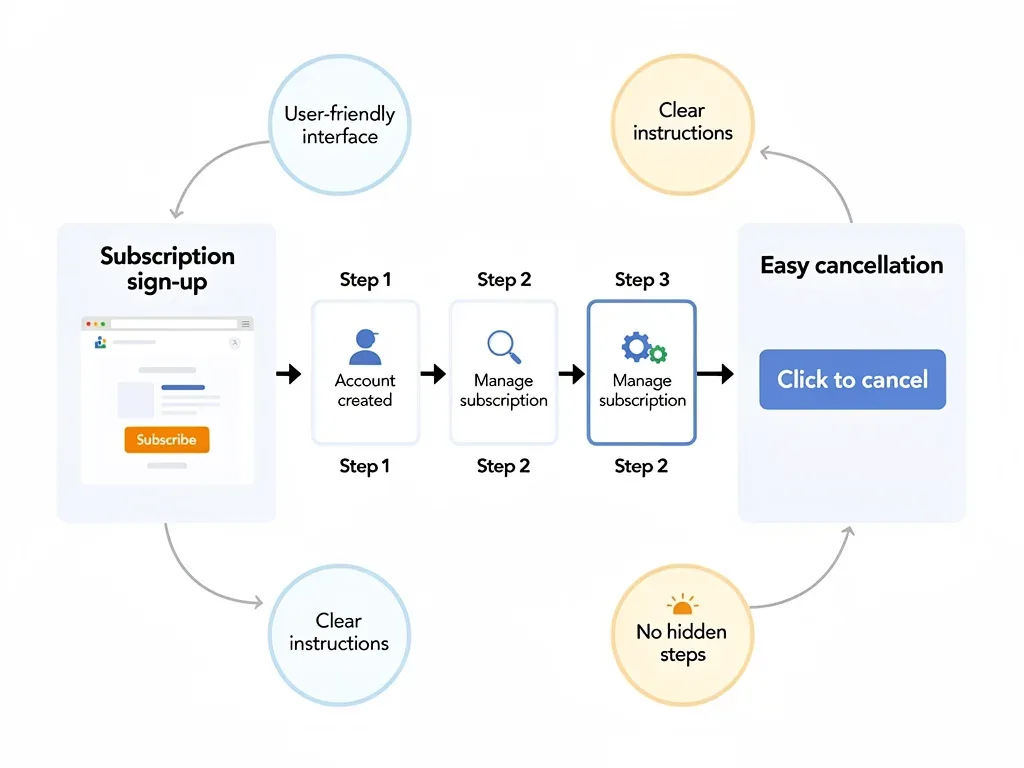
The core of the FTC's new mandate centers on the ease and clarity of subscription cancellation. Businesses must provide a cancellation method that is at least as simple as the method used to subscribe, often referred to as 'Click to Cancel'. This means if a consumer can sign up online with a few clicks, they must also be able to cancel online with similar ease.
Furthermore, the rule addresses negative option marketing, requiring clear disclosures of all material terms before consumers incur charges.
Anúncios
This includes the total cost, billing frequency, and instructions for cancellation. These provisions are designed to prevent consumers from unknowingly enrolling in subscriptions or facing unexpected charges.
The mandate also stipulates that businesses must obtain affirmative consent for all charges and provide an annual reminder for subscriptions with automatic renewals.
These measures collectively aim to empower consumers and ensure they have full control over their recurring expenditures. The FTC Finalizes Click to Cancel Mandate to enforce these critical consumer protections.
Understanding the 'Click to Cancel' Requirement
The 'Click to Cancel' provision mandates that if a consumer can subscribe to a service online, they must also be able to cancel it online through a simple, user-friendly process. This eliminates the need for phone calls, emails, or other cumbersome methods that often deter consumers from canceling.
This requirement is a direct response to widespread consumer complaints about deceptive subscription practices, where signing up is effortless but canceling becomes a labyrinthine task. The FTC aims to level the playing field, ensuring that businesses prioritize customer convenience over retention tactics that border on obstruction.
Companies are now tasked with reviewing their digital interfaces and ensuring that their cancellation pathways are clearly visible and intuitive.
This includes unambiguous buttons or links that lead directly to the cancellation process, without requiring excessive navigation or re-authentication steps. The FTC Finalizes Click to Cancel Mandate to hold companies accountable for these standards.
Anúncios
Enhanced Disclosure and Consent Obligations
Businesses must clearly and conspicuously disclose all material terms before obtaining consent for any negative option feature.
This includes the amount or range of costs, the due dates for payments, and the duration of the subscription.
Consumers must give express informed consent before being charged for any recurring service.
An annual reminder must be sent for automatically renewing subscriptions, detailing renewal terms and cancellation instructions.
These obligations are designed to combat 'dark patterns' and other deceptive marketing strategies that trick consumers into subscriptions. The FTC emphasizes that transparency is paramount, ensuring consumers are fully aware of what they are agreeing to before any financial commitment is made.
The clarity of disclosures must extend beyond initial sign-up, impacting subsequent communications and billing statements. Businesses must make it easy for consumers to access and understand their subscription details at any point. The FTC Finalizes Click to Cancel Mandate to ensure these practices are universally adopted.
The $50,000 Penalty Per Subscription Violation: A Serious Consequence
The most impactful aspect of the new rule is the imposition of a staggering $50,000 penalty for each subscription violation. This substantial fine underscores the FTC's resolve to enforce compliance and deter companies from engaging in practices that exploit consumers. Businesses must recognize the severe financial risk associated with non-adherence.
This penalty is not a one-time fine but can be applied per violation, meaning a company with multiple non-compliant subscriptions or numerous instances of difficult cancellations could face astronomical fines. The potential for cumulative penalties makes proactive compliance an absolute necessity for all businesses operating with subscription models.
The FTC's authority to levy such significant penalties stems from its mandate to protect consumers from unfair and deceptive practices. This financial deterrent is expected to compel businesses to thoroughly overhaul their subscription management systems. The FTC Finalizes Click to Cancel Mandate to protect consumers from widespread abuse.
Calculating the Impact of Penalties
Imagine a scenario where a company has thousands of subscribers, and its cancellation process is deemed non-compliant. If even a fraction of these subscriptions represent a violation, the fines could quickly escalate into millions of dollars. This exponential penalty structure serves as a powerful incentive for immediate and comprehensive compliance.
Businesses must consider not only direct violations of the 'Click to Cancel' rule but also failures in disclosure, consent, and annual reminders.
Each of these components can trigger separate penalties, multiplying the financial exposure. The holistic nature of the mandate requires a thorough review of the entire customer journey for subscription services.
Legal experts are advising companies to conduct internal audits, update their terms of service, and retrain customer service staff to align with the new regulations. The cost of non-compliance far outweighs the investment in preventative measures. The FTC Finalizes Click to Cancel Mandate to ensure businesses prioritize consumer rights.
Who is Affected: Businesses and Consumers
The new FTC mandate has broad implications for both businesses and consumers across various sectors.
Any company offering subscription-based services, from streaming platforms and software providers to fitness apps and news outlets, falls under the purview of this regulation. The impact will be felt by large corporations and small startups alike.
For consumers, the mandate brings a welcome relief from the frustrations often associated with canceling unwanted subscriptions.
It empowers them with greater control over their financial commitments and reduces the likelihood of being trapped in recurring payment cycles. This increased protection is a significant win for consumer advocacy.
The regulatory changes are poised to foster a more transparent and consumer-friendly subscription market, compelling businesses to compete not just on their offerings but also on the ease of managing and canceling those services. The FTC Finalizes Click to Cancel Mandate to reshape market practices.
Implications for Subscription-Based Businesses
Businesses must now invest in user-friendly cancellation interfaces, clear communication strategies, and robust internal compliance mechanisms.
This includes updating website design, refining customer service scripts, and ensuring legal teams are fully informed of the new requirements. The shift demands a customer-centric approach to subscription management.
Companies that fail to adapt risk not only substantial fines but also damage to their brand reputation and loss of customer trust. In an increasingly competitive market, a seamless cancellation experience can become a differentiator, fostering goodwill even among departing customers. Proactive compliance is a strategic advantage.
Furthermore, businesses should anticipate increased scrutiny from consumer watchdogs and the FTC itself. The agency has shown a clear intent to enforce these rules vigorously. Therefore, a wait-and-see approach is ill-advised; immediate action is required. The FTC Finalizes Click to Cancel Mandate to set a new standard for business conduct.
Benefits for Consumers
Consumers gain the right to easily cancel subscriptions online, matching the ease of sign-up.
Clearer disclosures mean consumers will better understand terms and avoid hidden charges.
Annual reminders provide timely notifications for automatically renewing services.
The threat of $50,000 penalties incentivizes businesses to comply, leading to better consumer experiences.
These benefits translate into real financial savings and reduced stress for individuals. No longer will consumers have to navigate complex phone trees or send multiple emails to end a subscription they no longer want. The power balance shifts, giving consumers more agency over their purchasing decisions. The FTC Finalizes Click to Cancel Mandate to empower consumers.
Navigating Compliance: Steps for Businesses
Achieving compliance with the FTC's new Click to Cancel mandate requires a multi-faceted approach. Businesses should begin by conducting a comprehensive audit of their current subscription enrollment and cancellation processes. This audit should identify any areas that fall short of the new 'Click to Cancel' requirements and disclosure standards.
Following the audit, companies must implement necessary changes to their digital platforms, terms of service, and customer communication strategies.
This often involves redesigning parts of their website or app, updating legal disclaimers, and creating new automated reminder systems. Training for customer service representatives is also crucial to ensure they understand and uphold the new regulations.
Continuous monitoring and regular reviews of these processes are essential to maintain ongoing compliance and adapt to any future clarifications from the FTC.
Proactive engagement with legal counsel specializing in consumer protection laws is highly recommended to ensure all bases are covered. The FTC Finalizes Click to Cancel Mandate, making compliance a top priority.

Essential Compliance Checklist
Review all subscription sign-up flows for clear disclosures and explicit consent.
Implement an online cancellation path that is as straightforward as the sign-up process.
Ensure all material terms are prominently displayed before any charges are incurred.
Establish systems for sending annual renewal reminders with clear cancellation instructions.
Train customer service teams on the new cancellation procedures and disclosure requirements.
Beyond these technical and procedural changes, businesses should cultivate a culture of transparency and customer-centricity.
This cultural shift can help prevent future compliance issues and build stronger, more trusting relationships with their customer base. Compliance should be viewed as an opportunity to enhance customer experience, not merely a regulatory burden.
The Broader Impact on the Subscription Economy
The FTC's Click to Cancel mandate is poised to have a transformative effect on the entire subscription economy. While some businesses may initially view these regulations as burdensome, they ultimately foster a healthier and more sustainable market environment. Increased consumer trust can lead to greater willingness to engage with subscription services that demonstrate integrity.
This regulatory intervention could also spur innovation in how companies retain customers, shifting focus from difficult cancellation processes to delivering genuine value and exceptional service.
Businesses will be encouraged to earn customer loyalty through superior offerings rather than through entrapment. The FTC Finalizes Click to Cancel Mandate to drive this positive change.
Ultimately, a market where consumers feel empowered and respected is one that is more likely to thrive in the long term. The mandate sets a new baseline for ethical business practices, benefiting both consumers and responsible companies. This ensures that the growth of the subscription economy is built on a foundation of fairness and transparency.
Historical Context and Future Outlook
The FTC's action is not isolated; it builds upon a history of consumer protection efforts aimed at curbing deceptive marketing. The negative option rule has been a point of contention for years, with the FTC consistently advocating for stronger consumer safeguards. This final mandate represents the culmination of those ongoing efforts.
Looking ahead, businesses should anticipate continued regulatory scrutiny in areas related to consumer consent and data privacy.
The trend is clearly towards greater transparency and control for consumers, and companies that proactively embrace these principles will be better positioned for future success. The FTC Finalizes Click to Cancel Mandate as part of a larger push for consumer rights.
The enforcement of this mandate will likely be closely watched, with early cases setting precedents for how violations are interpreted and penalties are applied.
Businesses should stay informed of any further guidance or enforcement actions from the FTC to ensure their ongoing compliance. The regulatory landscape is evolving, and adaptability is key.
Key Point | Brief Description |
|---|---|
Mandate Core | 'Click to Cancel' must be as easy as signing up for subscriptions. |
Penalties | $50,000 fine per subscription violation, emphasizing compliance urgency. |
Affected Parties | All businesses with subscriptions and their consumers in the US. |
Compliance Steps | Audit processes, update platforms, train staff, and ensure clear disclosures. |
Frequently Asked Questions About the FTC Click to Cancel Mandate
What exactly does 'Click to Cancel' mean?▼
It means that if consumers can subscribe to a service online with a few clicks, they must also be able to cancel it online with similar ease. This eliminates the need for phone calls, emails, or other complex methods, ensuring a straightforward and accessible cancellation process.
Which businesses are impacted by this new FTC rule?▼
All businesses offering subscription-based services in the United States are impacted. This includes a wide range of industries such as streaming services, software providers, online publications, and any company with recurring billing models for their products or services.
What are the penalties for non-compliance with the mandate?▼
Businesses face a severe penalty of up to $50,000 per subscription violation. This fine can accumulate rapidly, making proactive and comprehensive compliance essential to avoid significant financial repercussions and legal challenges from the Federal Trade Commission.
How does this mandate benefit consumers?▼
Consumers gain greater control over their subscriptions, making it easier to cancel unwanted services and avoid unexpected charges. The mandate promotes transparency, ensuring consumers receive clear disclosures and annual reminders, ultimately fostering a more trustworthy subscription market.
What steps should businesses take to ensure compliance?▼
Businesses should conduct thorough audits of their subscription processes, update their online platforms to facilitate easy cancellation, ensure clear disclosures of all terms, and train their customer service teams. Consulting legal counsel specializing in consumer protection is also highly recommended for ongoing compliance.
What This Means for the Future
The FTC Finalizes Click to Cancel Mandate, signaling a pivotal moment for consumer protection and business practices in the subscription economy. This move underscores a growing regulatory trend towards greater transparency and consumer control.
Businesses must now proactively adapt, not just to avoid penalties, but to build lasting trust with their customer base. The coming months will reveal how effectively industries integrate these new standards, shaping the future of digital commerce.