Federal Labor Board Mandates Remote Work Transparency Rules in 2026
Anúncios
Working from home is no longer the wild west of unclear schedules and surprise monitoring. With federal Remote Work Transparency Rules officially rolling out in June 2026, U.S. employers and distributed teams face a major shift in workplace standards.
These nationwide labor regulations eliminate guesswork around digital surveillance, off-hours availability, and home-office expense disclosures. Companies can no longer leave telecommuters in the dark about how their performance and pay are evaluated.
Whether you manage a distributed team or log in from your living room, understanding these protections is essential. Here is how the new federal guidelines reshape your rights and daily workflow.
Understanding the Federal Labor Board's New Mandate
The Federal Labor Board has officially announced new transparency rules for remote work, scheduled to be fully implemented by June 2026.
This mandate is designed to address the complexities arising from the rapid expansion of remote and hybrid work models. The rules seek to establish clear guidelines for communication, performance metrics, and employee rights in a remote setting.
Anúncios
These regulations are the culmination of extensive research and public commentary, reflecting a concerted effort to balance employer flexibility with employee protection.
The Board emphasizes that these rules are not meant to stifle innovation but rather to foster a more predictable and fair work environment. Businesses must begin assessing their current remote work policies to ensure future compliance.
Initial reactions from industry leaders suggest a mixed response, with some welcoming the clarity while others express concerns about potential administrative burdens. The Federal Labor Board Mandates Remote Work Transparency Rules aims to provide a framework that minimizes ambiguity and enhances accountability. Employers should focus on understanding the specifics of these mandates now.
Key Provisions of the Remote Work Transparency Rules
The new rules introduce several critical provisions that will directly impact how organizations manage their remote workforce. These provisions cover areas such as communication protocols, performance evaluation, data privacy, and the clear delineation of work-from-home expectations. Each aspect is designed to promote openness and reduce potential disputes.
One of the central tenets of the Federal Labor Board Mandates Remote Work Transparency Rules is the requirement for clear, written agreements outlining remote work terms. This includes details on work hours, availability, equipment provision, and reimbursement policies. Such agreements are intended to prevent misunderstandings and provide a solid legal foundation.
Furthermore, the mandate emphasizes equitable treatment for remote employees compared to their in-office counterparts. This extends to opportunities for professional development, access to company resources, and fair compensation structures. The Federal Labor Board is pushing for a level playing field, regardless of an employee's physical work location.
Mandatory Written Agreements
Employers will be required to provide clear, written agreements to all remote employees detailing the terms and conditions of their remote work arrangement. These agreements must cover specific aspects to ensure full transparency.
Anúncios
The agreements are expected to include details on job responsibilities, performance expectations, communication channels, and any specific tools or software required. This level of detail aims to eliminate ambiguity regarding remote work roles.
Outline specific work hours and expected availability.
Detail company-provided equipment and technical support.
Clarify reimbursement policies for home office expenses.
Specify performance metrics and evaluation processes.
Fair Performance Evaluation
The new rules mandate that performance evaluation processes for remote workers must be transparent, objective, and non-discriminatory. Companies must ensure that remote employees are assessed using criteria relevant to their roles, without bias related to their remote status.
This means establishing clear goals and benchmarks that are achievable remotely, and providing regular feedback mechanisms. The goal is to ensure remote workers have the same opportunities for advancement and recognition as their in-office colleagues.
Impact on Employers and Human Resources
The Federal Labor Board Mandates Remote Work Transparency Rules Taking Effect in June 2026 will necessitate significant adjustments for employers and HR departments. Companies will need to revise existing policies, update employee handbooks, and potentially invest in new technologies to ensure compliance. The proactive approach is crucial to avoid penalties.
HR professionals will play a critical role in educating both management and employees about these new regulations. Training programs will likely be essential to ensure that all stakeholders understand their rights and responsibilities under the new transparency rules. This period presents an opportunity to streamline and modernize remote work frameworks.
The administrative burden might initially seem substantial, but the long-term benefits of clear guidelines can outweigh the initial effort. Reduced legal risks, improved employee satisfaction, and enhanced productivity are potential outcomes of effectively implementing the Federal Labor Board Mandates Remote Work Transparency Rules. Strategic planning is key.
Policy Revisions and Compliance
Companies must undertake a thorough review of their current remote work policies to identify areas requiring revision to align with the new federal mandates. This includes scrutinizing existing contracts, benefit structures, and disciplinary procedures.
Compliance will not be a one-time event but an ongoing process requiring continuous monitoring and adaptation. Establishing internal audit mechanisms will help ensure adherence to the Federal Labor Board Mandates Remote Work Transparency Rules.
Review and update all remote work agreements.
Amend employee handbooks to reflect new regulations.
Develop clear guidelines for remote employee onboarding.
Establish internal compliance checks and reporting.
Training and Communication
Effective communication and comprehensive training programs are paramount for successful implementation. All levels of management, from team leaders to senior executives, must be fully conversant with the new rules.
Employees also need clear information sessions to understand how these changes affect their daily work and their rights. A well-informed workforce is better equipped to adapt and thrive under the new remote work transparency rules.
What Remote Employees Need to Know
For remote employees, the Federal Labor Board Mandates Remote Work Transparency Rules brings a new layer of protection and clarity. These rules aim to ensure that remote workers receive fair treatment and have a clear understanding of their employment terms. It is essential for employees to familiarize themselves with these upcoming changes.
Employees should expect to receive updated remote work agreements from their employers, detailing the new transparency provisions. Reviewing these documents carefully and asking questions is crucial to understanding personal implications. These mandates are designed to empower remote workers with greater certainty.
The new rules also provide avenues for addressing concerns related to remote work conditions, performance evaluations, or any perceived inequities. Knowing these channels and understanding the protections afforded by the Federal Labor Board Mandates Remote Work Transparency Rules will be vital for all remote staff. Proactive engagement is encouraged.
Enhanced Employee Protections
The new mandate strengthens protections for remote employees, ensuring they are not disadvantaged due to their work location. This includes safeguarding against arbitrary changes to remote work terms and ensuring access to necessary resources.
Employees can expect greater clarity on performance expectations, reducing the likelihood of subjective evaluations. These protections are designed to foster a more stable and supportive environment for remote workers.
Clearer guidelines on work-life balance and communication.
Defined processes for addressing remote work-related grievances.
Assurance of equal access to career development opportunities.
Protection against discriminatory practices based on remote status.
Understanding Your Rights and Responsibilities
It is incumbent upon remote employees to understand their rights and responsibilities under the Federal Labor Board Mandates Remote Work Transparency Rules. This includes knowing what constitutes a valid remote work agreement and how to navigate any issues that may arise.
Employees also have responsibilities, such as adhering to communication protocols and maintaining productivity standards outlined in their agreements. A mutual understanding of these aspects will contribute to a harmonious remote work relationship.

Preparing for the June 2026 Deadline
The 2026 deadline for the Federal Labor Board Mandates Remote Work Transparency Rules is approaching rapidly, requiring both employers and employees to act decisively. Companies that begin their preparation early will be better positioned to adapt smoothly and avoid potential compliance issues. A phased approach to implementation can be highly effective.
Establishing a dedicated task force to oversee the transition can help manage the complexities of policy revisions, technological integrations, and employee training. This team can ensure that all aspects of the new rules are thoroughly addressed before the effective date. Proactive measures are crucial for a seamless transition.
For employees, staying informed about internal company communications and participating in any provided training sessions is essential. Understanding how the Federal Labor Board Mandates Remote Work Transparency Rules will affect individual roles and responsibilities will facilitate a smoother adjustment. Both parties benefit from adequate preparation.
Strategic Implementation Steps
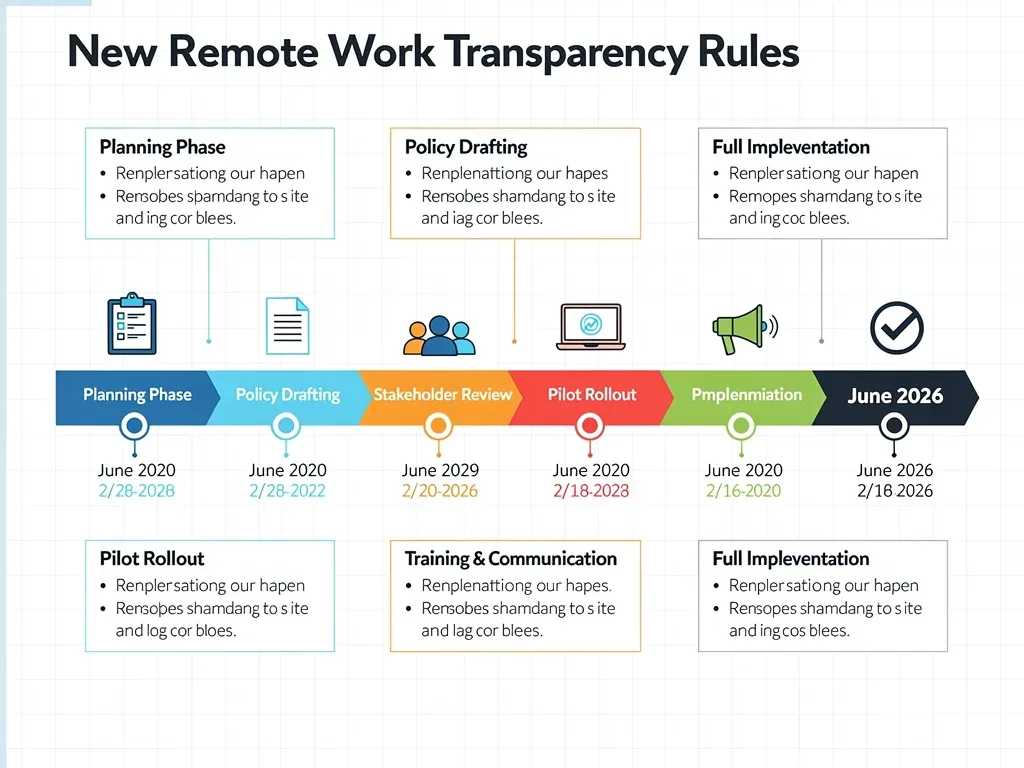
Employers should outline a strategic implementation plan that includes key milestones leading up to June 2026. This plan should encompass legal reviews, HR policy updates, technology assessments, and communication strategies for the entire workforce.
Prioritizing areas of highest impact, such as contract revisions and performance management systems, will ensure critical aspects are addressed first. A structured approach minimizes disruption and maximizes compliance with the Federal Labor Board Mandates Remote Work Transparency Rules.
Conduct a legal review of current remote work policies.
Update technology infrastructure to support transparency requirements.
Develop a comprehensive communication plan for all employees.
Pilot new policies in selected departments before full rollout.
Monitoring and Adaptation
Post-implementation, continuous monitoring and a willingness to adapt will be crucial. The landscape of remote work is constantly evolving, and the Federal Labor Board Mandates Remote Work Transparency Rules may be subject to future refinements or interpretations.
Companies should establish feedback mechanisms to gauge the effectiveness of new policies and make adjustments as needed. This iterative process ensures ongoing compliance and optimizes the remote work experience for everyone involved.
Broader Implications for the Future of Work
The Federal Labor Board Mandates Remote Work Transparency Rules will undoubtedly have broader implications for the future of work beyond immediate compliance. These regulations could set a precedent for how remote work is governed globally, influencing international labor standards. The United States is signaling a commitment to formalizing remote employment.
This mandate might also spur further innovation in HR technology, as companies seek more efficient ways to track compliance, manage remote teams, and ensure transparent communication. Software solutions designed to facilitate these new requirements are likely to emerge. The focus on transparency is expected to drive technological advancements.
Ultimately, the Federal Labor Board Mandates Remote Work Transparency Rules is poised to reshape workplace culture, fostering environments where clarity and fairness are paramount. This move could lead to increased trust between employers and employees, boosting overall job satisfaction and productivity in the long run. It marks a significant step forward.
Evolving Workplace Culture
The emphasis on transparency and clear communication, as mandated by the Federal Labor Board Mandates Remote Work Transparency Rules, will inevitably foster a more open and accountable workplace culture. This shift can lead to stronger employee engagement and loyalty.
Companies that embrace these changes not only comply with regulations but also cultivate an environment where remote employees feel valued and integrated. This positive cultural evolution benefits everyone involved in the remote work ecosystem.
Increased trust between management and remote staff.
Greater clarity on roles and responsibilities.
Reduced potential for misunderstandings and conflicts.
Enhanced sense of fairness and equity in the workplace.
Long-Term Economic and Social Impacts
Beyond individual workplaces, the Federal Labor Board Mandates Remote Work Transparency Rules could have significant long-term economic and social impacts. By formalizing remote work, the government is acknowledging its permanence and importance in the modern economy.
This could lead to increased investment in remote infrastructure, support for rural economies, and a more diverse workforce. The widespread adoption of clear remote work standards might also influence urban planning and transportation needs, reflecting a fundamental shift in how people live and work.
Key Point | Brief Description |
|---|---|
Effective Date | New rules for remote work transparency take effect June 2026. |
Core Mandate | Requires clear, written agreements for remote work terms. |
Employer Impact | Requires policy revisions, HR training, and compliance updates. |
Employee Benefits | Enhanced protections, clearer expectations, and fair treatment. |
Frequently Asked Questions About Remote Work Transparency Rules
What are the main goals of the Federal Labor Board's new rules?▼
The primary goals are to establish clear guidelines for remote work, ensure transparency in employment terms, and provide equitable treatment for remote employees. These rules aim to reduce ambiguities and foster a fair working environment across all remote operations.
When exactly do these new transparency rules become effective?▼
The Federal Labor Board Mandates Remote Work Transparency Rules Taking Effect in June 2026. This date marks the full implementation and enforcement of all provisions outlined in the new regulations. Employers and employees have ample time to prepare.
How will these rules impact small businesses with remote teams?▼
Small businesses with remote teams will need to review and update their remote work policies to ensure compliance. While the administrative burden might seem significant, the rules aim to create a level playing field and minimize future legal risks for all employers, regardless of size.
What should remote employees do to prepare for these changes?▼
Remote employees should stay informed about their company's internal communications regarding these rules. They should also carefully review any updated remote work agreements provided by their employers and participate in relevant training sessions to understand their rights and responsibilities.
Are there any exceptions to the Federal Labor Board Mandates Remote Work Transparency Rules Taking Effect in June 2026?▼
While the rules apply broadly, specific details regarding potential exceptions or industry-specific considerations may emerge as implementation guidance is further clarified. It is always advisable to consult official Federal Labor Board publications and legal counsel for precise applicability to unique situations.
Looking Ahead: The Future of Remote Work Governance
The Federal Labor Board Mandates Remote Work Transparency Rules signifies a definitive step towards formalizing remote work within the national labor framework. This mandate is not merely a compliance exercise but a foundational shift that will influence how businesses operate and how employees experience their work.
It urges a proactive stance from all stakeholders, emphasizing that adaptability and informed action are crucial for navigating this new regulatory landscape effectively. The long-term success of remote work hinges on embracing these principles of transparency and fairness.