Debt Avalanche Protocol: Eliminate $18,000 in 14 Months
Anúncios
Watching compounding interest swallow half your monthly credit card payment feels like running uphill in sand. Following a structured Debt Avalanche Protocol gives you a clear math-backed roadmap to wipe out $18,000 in revolving balances within 14 months.
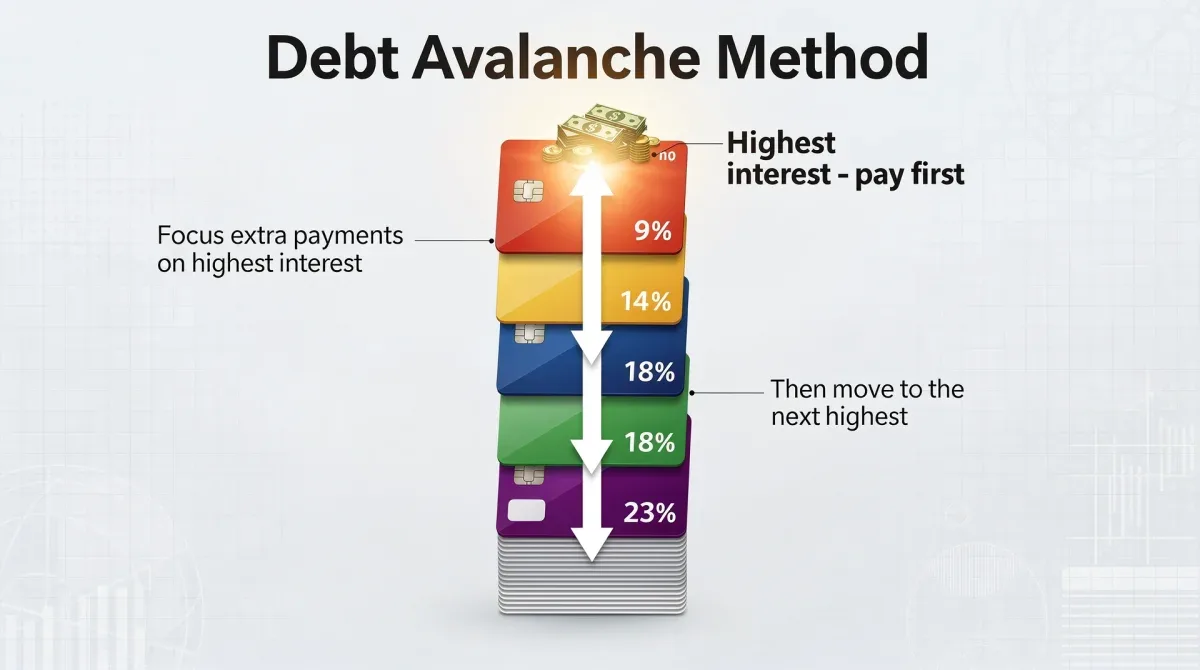
Instead of splitting extra cash evenly or chasing small balances first, you pay minimums across every account and throw every spare dollar at your highest-APR card. Once that costly balance hits zero, you roll its full payment into the next highest-rate debt, cutting total interest charges to the bone.
Whether you are juggling high-APR store cards or trying to free up monthly cash flow before interest compounds further, disciplined payoff sequencing changes the math fast. Here are the exact payoff milestones, cash-flow steps, and interest traps to watch next.
Understanding the Debt Avalanche Protocol
The debt avalanche protocol is a debt repayment strategy that prioritizes paying off debts with the highest interest rates first. This approach minimizes the total interest paid over the life of the debt, leading to significant savings and faster debt elimination.
It stands in contrast to the debt snowball method, which focuses on paying off the smallest debts first for psychological wins. While both methods have their merits, the debt avalanche protocol is mathematically superior for saving money.
Anúncios
Implementing a successful debt avalanche protocol requires meticulous planning, a firm commitment, and consistent execution. It is not merely about making payments but about strategic allocation of funds.
The Core Mechanics of the Debt Avalanche Protocol
The fundamental principle involves listing all credit card debts from the highest annual percentage rate (APR) to the lowest. Once this hierarchy is established, extra funds are directed towards the debt at the top of the list.
While focusing on the highest-interest debt, minimum payments must still be made on all other credit card accounts. This ensures no accounts fall into delinquency, which could further damage credit scores and incur additional fees.
As each high-interest debt is fully paid off, the money previously allocated to it, plus any extra funds, is then rolled into the next highest-interest debt. This creates a powerful cascading effect, accelerating debt repayment.
Identify all outstanding credit card balances.
List each balance with its corresponding interest rate.
Prioritize debts from highest to lowest interest rate.
Commit to paying more than the minimum on the highest-interest debt.
Why the Debt Avalanche Protocol Works
The debt avalanche protocol is effective because it directly attacks the most expensive components of debt first. By reducing the principal of high-interest debts faster, borrowers minimize the overall interest accrual, which is often the biggest hurdle in debt repayment.
This method also provides a clear, logical framework that can be easily understood and followed. The systematic approach helps maintain motivation as individuals see their highest-cost debts disappearing.
Moreover, the savings from reduced interest can be substantial, freeing up more money to accelerate the repayment process further. This financial efficiency makes it a preferred strategy for informed borrowers.
Anúncios
Formulating a 14-Month Plan for $18,000
Eliminating $18,000 in credit card balances within 14 months using a debt avalanche protocol requires a precise financial roadmap. This plan involves a detailed assessment of current income, expenses, and a commitment to finding additional funds for debt repayment.
The average monthly payment needed to cover an $18,000 balance over 14 months, assuming an average interest rate, will be substantial. This necessitates a thorough budgeting process to identify areas for cost reduction and income enhancement.
Successful execution hinges on consistency and the ability to adapt the plan as circumstances change. It is a dynamic process that requires regular review and adjustment to stay on track.
Initial Assessment and Budgeting for the Debt Avalanche Protocol
The first step involves a comprehensive review of all credit card statements to accurately identify balances and interest rates. This forms the foundation for prioritizing debts within the debt avalanche protocol.
Next, a detailed budget must be created, meticulously tracking all income and expenses. This exercise is critical for identifying discretionary spending that can be reallocated to debt payments, bolstering the debt avalanche protocol.
Every dollar saved and every additional dollar earned directly contributes to accelerating the debt repayment timeline. This initial assessment sets the stage for the aggressive repayment strategy.
The budget should not only focus on cutting expenses but also on exploring opportunities to increase income. This could include taking on a side hustle, selling unused items, or negotiating a raise.
Once a clear picture of available funds is established, these extra amounts are earmarked for the highest-interest credit card. This consistent application of additional funds is what makes the debt avalanche protocol so powerful.
It is important to be realistic yet aggressive with budget adjustments, understanding that temporary sacrifices will lead to long-term financial stability. The goal is to free up as much capital as possible for debt reduction.
Strategies for Accelerating Debt Repayment
Beyond standard budgeting, several strategies can significantly accelerate the repayment process under a debt avalanche protocol. These tactics range from temporary lifestyle adjustments to leveraging financial tools designed for debt consolidation or balance transfers.
Each strategy aims to free up more capital to direct towards the highest-interest debt, thereby shortening the 14-month timeline or making it more achievable. The combination of these approaches can yield powerful results.
It is crucial to evaluate each option carefully to determine its suitability for individual financial situations and to ensure it aligns with the overall debt avalanche protocol.
Leveraging Balance Transfers and Debt Consolidation
Consider a balance transfer to a new credit card with a 0% introductory APR if your credit score allows. This can provide a crucial window, typically 12-18 months, to pay down a significant portion of the principal without accruing interest, directly supporting the debt avalanche protocol.
However, be mindful of balance transfer fees, which typically range from 3-5% of the transferred amount. Ensure that the savings from the 0% APR outweigh these upfront costs and that you can pay off the transferred balance before the promotional period ends.
Debt consolidation loans offer another avenue, combining multiple high-interest debts into a single loan with a lower, fixed interest rate. This simplifies payments and can reduce the overall interest burden, making the debt avalanche protocol more manageable.
Research 0% APR balance transfer offers.
Calculate balance transfer fees versus interest savings.
Explore debt consolidation loan options.
Ensure new loan terms are favorable and fixed.
Increasing Income and Reducing Expenses
Actively seeking opportunities to increase income can dramatically impact the speed of debt repayment. This might involve taking on freelance work, selling items online, or even negotiating a salary increase at your current job.
Similarly, a rigorous review of monthly expenses to identify non-essential spending is paramount. Cutting back on dining out, subscriptions, or entertainment can free up hundreds of dollars each month, which can then be applied to the debt avalanche protocol.
Even small, consistent reductions in daily spending accumulate over time, providing significant additional funds for debt elimination. Every dollar counts when aiming to clear $18,000 in 14 months.
Monitoring Progress and Staying Motivated
Consistent monitoring of progress is essential to successfully navigate the debt avalanche protocol and eliminate $18,000 in credit card balances within 14 months. Tracking payments and remaining balances provides a clear picture of how far you’ve come and how much further you need to go.
This regular review also helps in identifying any deviations from the plan, allowing for timely adjustments. Staying informed about your financial standing reinforces commitment and prevents discouragement.
Motivation is a critical component of any long-term financial goal. Celebrating small victories along the way can help maintain momentum and keep you focused on the ultimate objective of debt freedom.
Tools and Techniques for Tracking Debt Avalanche Protocol Progress
Utilize spreadsheets, budgeting apps, or online financial tools to meticulously track each payment and the shrinking balance of your credit cards. Visual representations, such as charts or graphs, can be incredibly motivating.
Regularly review your credit card statements and credit reports to ensure accuracy and to see the tangible impact of your efforts. Observing your credit score improve as balances decrease can be a powerful motivator.
Set up automated reminders for minimum payments on all cards to avoid late fees and missed deadlines, which can derail your debt avalanche protocol. This automation ensures consistency and reduces the mental load.
Use budgeting apps or spreadsheets for tracking.
Review credit card statements and credit reports frequently.
Set up automated payment reminders.
Visualize progress with charts and graphs.
Maintaining Motivation Through Challenges
Debt repayment journeys often encounter unexpected challenges, such as unforeseen expenses or income fluctuations. It’s crucial to have an emergency fund in place to mitigate these setbacks without resorting to more debt.
Connect with supportive communities, either online or in person, where individuals share their debt repayment experiences. Hearing success stories and getting advice from others can provide invaluable encouragement.
Remind yourself of the long-term benefits of eliminating debt, such as improved financial flexibility, reduced stress, and the ability to achieve other financial goals. This future-oriented mindset is vital for sustaining motivation throughout the debt avalanche protocol.
Common Pitfalls and How to Avoid Them
While a structured debt avalanche protocol offers a clear path to eliminating $18,000 in credit card balances within 14 months, certain pitfalls can derail even the most committed individuals. Awareness of these common challenges is the first step toward avoiding them.
Many people struggle with sticking to their budget, succumbing to impulse purchases, or taking on new debt. These actions directly undermine the progress made and extend the repayment timeline.
Understanding these obstacles and proactively implementing strategies to overcome them is crucial for the successful execution of the debt avalanche protocol. Vigilance and discipline are key.
Avoiding New Debt and Overspending
The most significant pitfall is accumulating new debt while trying to pay off existing balances. This creates a vicious cycle that negates the efforts of the debt avalanche protocol.
Implement strict spending controls, such as a cash-only budget for discretionary categories or a mandatory waiting period before making non-essential purchases. These measures help curb impulse buying and maintain financial discipline.
Temporarily putting credit cards away or even freezing them can be an effective psychological barrier against using them. The goal is to break reliance on credit for everyday expenses.
Avoid taking on any new credit card debt.
Implement strict spending controls and a cash-only budget.
Temporarily remove credit cards from easy access.
Review all purchases before finalizing them.
Staying Consistent with the Debt Avalanche Protocol
Inconsistency in making extra payments or sticking to the budget is another common pitfall. The debt avalanche protocol relies on consistent, aggressive payments to achieve its accelerated timeline.
Automate as many payments as possible, including transferring extra funds to your highest-interest credit card. This reduces the likelihood of forgetting or procrastinating on payments.
Regularly review your budget and financial goals to reinforce your commitment. If you find yourself deviating, identify the triggers and adjust your strategy accordingly to get back on track with the debt avalanche protocol.

The Long-Term Impact of Debt Elimination
Successfully implementing a debt avalanche protocol to eliminate $18,000 in credit card balances within 14 months has profound long-term impacts beyond just being debt-free. It establishes a foundation for robust financial health and opens doors to new opportunities.
The discipline learned during this intense repayment period translates into better financial habits for the future. This newfound financial literacy is invaluable for long-term wealth building.
Moreover, being free from high-interest credit card debt significantly reduces financial stress and improves overall quality of life. This transformation empowers individuals to pursue their financial goals with greater confidence.
Building a Stronger Financial Future
With credit card debt eliminated, funds previously allocated to payments can now be redirected towards savings, investments, or retirement planning. This accelerates wealth accumulation and enhances financial security.
An improved credit score, a direct result of consistent debt repayment, provides access to better interest rates on future loans, such as mortgages or car loans. This saves money on major purchases over time.
The experience of successfully tackling a significant debt demonstrates financial resilience and problem-solving skills. These are transferable assets that benefit all aspects of future financial management.
Real-World Success Stories and Expert Insights
Numerous individuals have successfully utilized a debt avalanche protocol to eliminate substantial credit card balances, often within aggressive timelines. These real-world examples provide powerful validation and inspiration for others embarking on a similar journey.
Financial experts consistently advocate for the debt avalanche protocol due to its mathematical efficiency and proven track record. Their insights reinforce the importance of discipline, planning, and consistent action.
These success stories and expert recommendations highlight that eliminating $18,000 in 14 months is not just a theoretical possibility but an achievable reality for those who commit to the strategy.
Testimonials and Verified Outcomes
Many individuals report significant reductions in financial stress and a renewed sense of control over their finances after implementing the debt avalanche protocol. Stories frequently detail how initial skepticism turned into triumphant debt freedom.
For instance, a recent case study highlighted a single parent in Ohio who, using a structured debt avalanche protocol, paid off $19,500 in credit card debt in just 15 months. This was achieved through rigorous budgeting and a temporary second job.
These verified outcomes underscore the power of focused effort and a well-executed plan. They serve as a testament to the effectiveness of the debt avalanche protocol when applied diligently.
The Role of Financial Literacy in Debt Elimination
Financial literacy plays a pivotal role in the successful implementation of a debt avalanche protocol. Understanding key financial concepts, such as interest rates, budgeting, and credit scores, empowers individuals to make informed decisions and sustain their debt elimination efforts.
Without a solid grasp of these fundamentals, even a well-structured plan can falter. Education provides the tools necessary to navigate the complexities of personal finance and avoid future debt traps.
Investing time in learning about personal finance is an investment in long-term financial stability and independence. It’s an ongoing process that yields continuous benefits.
Key Financial Concepts for Debt Avalanche Protocol Success
A clear understanding of how interest rates compound is fundamental to appreciating why the debt avalanche protocol prioritizes high-interest debts. This knowledge reinforces the strategy's mathematical advantage.
Mastering budgeting techniques is crucial for identifying and allocating extra funds towards debt repayment. Effective budgeting is the backbone of any successful debt elimination plan, ensuring that resources are maximized.
Understanding credit scores and how they are impacted by debt levels provides an additional incentive for repayment. A higher credit score translates into better financial opportunities in the future.
Key Point | Brief Description |
|---|---|
Protocol Focus | Prioritizes highest interest rate debt for maximum savings. |
Timeline Target | Eliminates $18,000 in credit card balances within 14 months. |
Core Strategy | Aggressive payments on highest APR, minimums on others. |
Key to Success | Strict budgeting, increased income, and consistent execution. |
Frequently Asked Questions About Debt Avalanche Protocol
What is a Structured Debt Avalanche Protocol?▼
A Structured Debt Avalanche Protocol is a debt repayment strategy that focuses on paying off debts with the highest interest rates first. This method saves the most money on interest over time, compared to other strategies like the debt snowball, by targeting the most expensive debts first.
How quickly can $18,000 in credit card debt be eliminated?▼
With a disciplined approach using a debt avalanche protocol, it is possible to eliminate $18,000 in credit card balances within 14 months. This requires aggressive budgeting, consistent extra payments, and a strong commitment to the repayment plan.
What are the main steps to start a Debt Avalanche Protocol?▼
To start, list all your credit card debts by their interest rates, from highest to lowest. Make minimum payments on all cards except the one with the highest interest, to which you direct all extra funds. Repeat this process as each card is paid off.
Is the Debt Avalanche Protocol better than the Debt Snowball Method?▼
Mathematically, the Debt Avalanche Protocol is superior for saving money on interest. The Debt Snowball Method, which pays off the smallest debts first, offers psychological wins but typically results in more interest paid overall. The best method depends on individual motivation and financial discipline.
What challenges might arise when using this protocol?▼
Common challenges include unexpected expenses, difficulty sticking to a strict budget, and the temptation to incur new debt. Maintaining an emergency fund, regularly reviewing your budget, and staying motivated are crucial to overcome these obstacles and succeed.
What this means
The successful implementation of a structured debt avalanche protocol to eliminate $18,000 in credit card balances within 14 months represents a significant shift towards financial empowerment for many. This strategy not only offers a clear, achievable path to debt freedom but also instills invaluable financial discipline.
As more individuals adopt and succeed with this method, it underscores the importance of proactive debt management and financial literacy. The immediate impact is reduced financial burden, while the long-term implications include improved credit scores and enhanced financial stability.
Moving forward, continued emphasis on accessible financial education and robust debt repayment strategies like the debt avalanche protocol will be crucial. This approach equips individuals with the tools to navigate economic challenges and build a more secure financial future.